888-871-6573
Call Toll Free

Call Toll Free
Call Toll Free
Compare cable tie alternatives for industrial use. Explore stainless steel options, installation tools, and fast turnaround suppliers for manufacturing.
Last Updated: October 12, 2026
Standard cable ties have dominated industrial cable management for decades, but cable tie alternatives manufacturing solutions are often better for demanding manufacturing environments. One-time-use plastic ties create hidden costs: constant replacement, worker downtime, and environmental waste.
The real problem isn’t the cable tie itself, it’s that manufacturers inherit a supplier relationship without questioning whether it still fits. When vibration, temperature swings, corrosion, or extreme loads enter the picture, standard ties fail.
We work with manufacturers across oil and gas, construction, and heavy equipment. Switching suppliers isn’t about finding a cheaper option, it’s about matching your fastening solution to what your equipment demands. Companies that transition strategically see measurable gains in reliability and maintenance costs.
Not every fastening challenge requires the same solution. Some environments need extreme corrosion resistance, others need reusability, and some need both. Understanding what alternatives exist is the first step toward a smarter choice.
Hook-and-loop straps offer a different approach: instead of cutting and discarding, you adjust tension, remove, and reuse the same strap dozens of times. For frequent reconfiguration or temporary installations, that’s a game-changer.
The advantage is flexibility. When cable routing changes for maintenance or upgrades, reusable straps let you adapt without waste or waiting for inventory. Installation is faster too: no special tools, just peel and press.
The trade-off is holding strength. Reusable straps excel at moderate tension and controlled environments, but are less suitable for high-vibration or outdoor installations where UV degrades the adhesive. For indoor manufacturing with stable cable runs, they’re reliable; for pipeline or marine work, go heavier.
This is where cable tie alternatives get serious. Stainless steel banding, typically 0.3 to 0.5 mm thick, provides industrial-grade holding strength plastic can’t match, resisting corrosion in saltwater, chemical-heavy environments, and temperature extremes.
It’s the standard for oil and gas, shipbuilding, and mining, holding consistent tension under vibration without degrading in UV or extreme cold. Installation requires a banding tool that applies controlled tension, but the result is a secure, tamper-evident connection that performs for years.
Cost per application is higher than plastic, but service life is dramatically longer. A stainless steel band on a pipeline bundle might last 5-10 years; a plastic tie in the same environment might fail within 12-18 months. Factor in replacement labor and failure risk, and stainless steel becomes economical.
Bungee cords and elastic tension systems serve use cases where flexibility matters more than permanent attachment: temporary cable bundling, securing equipment during transport, or absorbing vibration rather than resisting it rigidly.
The advantage is vibration dampening. Rigid fasteners transfer vibration directly to equipment; elastic systems absorb some of that energy, extending equipment life in high-vibration environments. They’re also quick to deploy and adjust.
The limitation is durability. UV breaks down elastic materials, and temperature swings loosen tension over time. For outdoor or temperature-variable applications, bungee systems need more frequent inspection and replacement than stainless steel.
Stainless steel cable ties are a middle ground between plastic ties and heavy banding. They’re individual fasteners like traditional ties, but made from corrosion-resistant material that performs in harsh environments, offering cable tie simplicity without the material limitations.
Stainless steel ties hold shape and tension better than plastic under temperature cycling and don’t degrade in saltwater spray or chemical-heavy atmospheres. For outdoor utility infrastructure or marine facilities, they eliminate the premature failure standard plastic ties experience.
Installation is similar to plastic ties, working with standard tie tools, but holding strength is higher. A stainless steel tie rated for 500 pounds maintains that load consistently; a same-size plastic tie might only handle 300 pounds before creeping.
The trade-off is cost and reusability. Stainless steel ties are one-time-use like plastic and cost 3-5 times more per unit, which adds up in high-volume applications.
The tool matters as much as the fastener. Standard cable tie guns work for plastic ties in low-stress applications, but aren’t designed for the precision required with high-strength materials or controlled tension in industrial settings.
Specialized tools for stainless steel banding deliver consistent tension, critical for equipment experiencing vibration or thermal cycling.
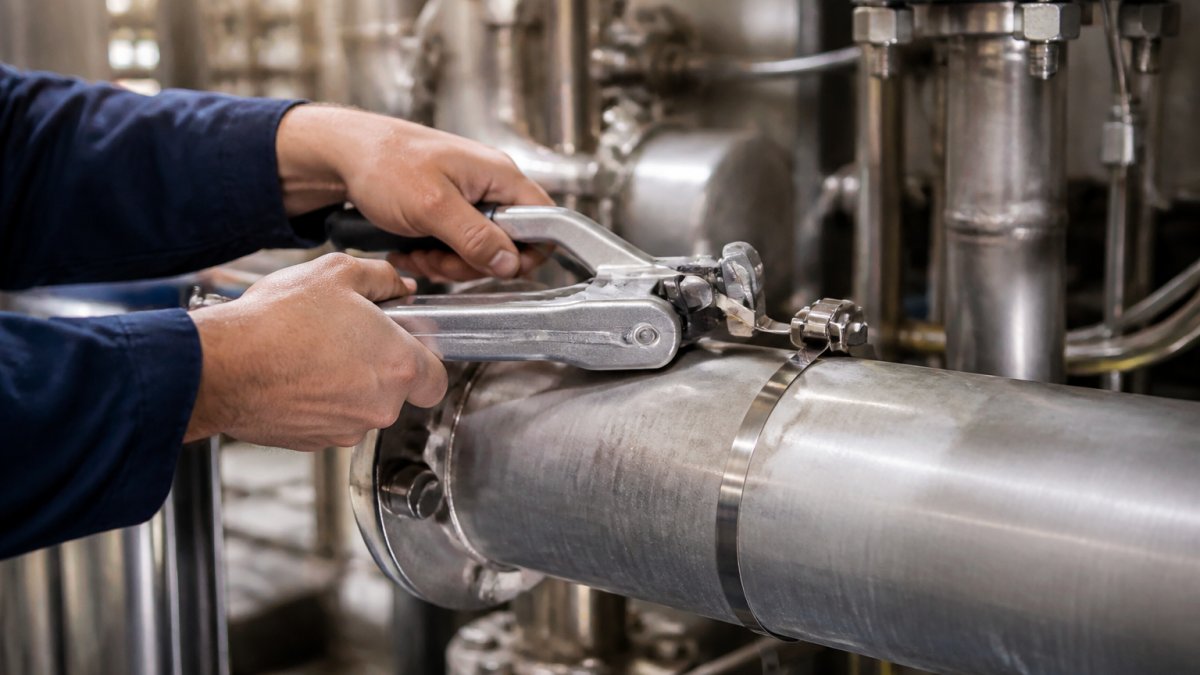
Investing in the right tool pays off when switching from plastic to stainless steel. A quality banding tool costs $200 to $600, but eliminates guesswork and reduces installation time.
For manufacturers evaluating stainless steel alternatives, tool cost is often the hidden expense that surprises procurement. Budget for it upfront and the transition goes smoother.
When you need custom stainless steel banding or specialized fastening solutions, supplier responsiveness is critical.
Suppliers offering fast turnaround, typically 5-10 business days for custom orders, let manufacturers respond to operational needs without disrupting schedules, especially valuable for companies with multiple facilities or complex projects requiring standardization.
Our no-minimum-order requirement means you source exactly what you need without bulk buying or long lead times. For a small electrical contractor or a large oil and gas operator, that flexibility means faster problem-solving and lower inventory carrying costs.
When evaluating suppliers, ask directly about lead times for custom orders, minimum order quantities, and whether pricing changes with order size. A supplier that penalizes small orders or requires lengthy minimums creates friction that undermines the value of switching.
Choosing the right option in cable tie alternatives manufacturing means moving beyond “what’s cheapest” to “what performs in our environment.” The best choice depends on three factors: load requirements, environmental conditions, and total cost of ownership.
Start by understanding what your fasteners need to hold. A cable bundle on an indoor control panel has minimal load requirements; a stainless steel band securing a vibrating compressor to a concrete pad has very different demands.
Load capacity includes static tension (weight held at rest) and dynamic load (performance under vibration, thermal cycling, or pressure changes). A fastener rated for 500 pounds static might only handle 200 pounds under constant vibration, and that difference matters.
For high-vibration applications like mining equipment or marine vessels, you need fasteners that maintain tension over time.
Ask suppliers for load ratings under your specific conditions, not just static specs. A “500 pounds” rating means nothing in a 40-degree-Celsius temperature swing. Stainless steel performs reliably across wide temperature ranges; plastic ties lose strength when hot and become brittle in extreme cold.
Environment determines material choice more than anything else. A fastener that works indoors becomes a liability in saltwater or chemical-rich atmospheres.
Stainless steel comes in grades. 304 resists general corrosion and suits most industrial environments. 316 adds molybdenum for superior corrosion resistance in saltwater and chemical environments, critical for marine operations or coastal facilities. 316 costs more, but in the right environment it’s the only choice that prevents premature failure.
For outdoor installations in temperate climates, 304 is typically sufficient. For marine environments, saltwater spray, or chemical processing, 316 becomes necessary. It costs 15-25% more, but service life can be 2-3 times longer.
Temperature extremes matter too. Plastic ties become brittle below -20°C and lose strength above 80°C; stainless steel performs reliably from -40°C to 120°C or beyond, depending on grade. If your facility sees temperature cycling, common outdoors or with seasonal operations, stainless steel eliminates that plastic failure mode.
This is where procurement teams often err by comparing per-unit pricing instead of total cost. A plastic tie costs $0.10, a stainless steel tie $0.50. On the surface plastic wins, but the calculation changes with replacement frequency and labor.
If a plastic tie fails after 18 months and a stainless steel tie lasts 5 years, the stainless tie delivers three replacements’ worth of value for five times the per-unit cost. Add labor, a technician spending 2 hours replacing failed ties costs far more than the fastener itself, and stainless steel becomes economical even in lower-stress applications.
Calculate total cost of ownership by multiplying per-unit cost by expected replacement frequency, then adding labor and downtime risk. A critical pipeline connection where failure creates safety risk or shutdown might justify stainless steel even at 10 times plastic’s per-unit cost.
| Application | Fastener Type | Per-Unit Cost | Expected Service Life | Annual Replacement Cost (labor + materials) |
|---|---|---|---|---|
| Indoor control panel | Plastic tie | Low | 3-5 years | Minimal |
| Outdoor utility infrastructure | Stainless steel tie | Medium | 5-8 years | Moderate |
| Saltwater marine equipment | 316 stainless banding | High | 8-12 years | Low |
| High-vibration industrial | Stainless steel banding | High | 5-10 years | Low |
Switching suppliers or fastener types creates operational friction if you don’t plan carefully. The most common mistakes fall into a few predictable categories.
Underestimating tool requirements. Teams assume they can install new fastener types with existing tools.
Failing to standardize across locations. Large manufacturers often have different suppliers per facility.
Not validating performance in your environment. A fastener that works in one facility might fail in another due to temperature, humidity, chemical exposure, or vibration.
Ignoring supplier responsiveness. Switching to a supplier with longer lead times creates its own problems.
Overlooking crew training. New fastener types and tools require worker training.
Switching from standard cable ties to specialized alternatives isn’t a cost-reduction play, it’s an operational upgrade. The right fastener prevents equipment failure, reduces maintenance labor, and improves safety.
Our custom stainless steel banding, no-minimum-order flexibility, and fast turnaround mean you can solve fastening challenges without typical supplier friction.
Industrial manufacturers choose reusable hook-and-loop straps, stainless steel banding, bungee cords, and lace lacing systems. Reusable straps offer adjustability and cost savings over time. Stainless steel banding provides superior strength and corrosion resistance for harsh environments like oil and gas pipelines. Bungee cords work well for vibration-prone applications. Each alternative addresses specific durability, reusability, and environmental challenges that standard nylon cable ties cannot meet.
Stainless steel cable ties excel in demanding environments where nylon fails. They resist corrosion in saltwater, chemical, and high-temperature conditions, making them essential for marine, mining, and oil and gas applications. Stainless steel maintains pull strength under vibration and temperature swings, preventing the preload loss common with nylon. For indoor, low-stress applications, nylon remains adequate and lower-cost. Manufacturing choice depends on environmental exposure, load requirements, and service life expectations.
Prioritize suppliers offering no minimum order requirements, in-stock inventory across multiple widths and thicknesses, and documented lead times under one week for custom orders. Verify they stock the specific coatings and gauges your application requires. Request references from similar industries (oil and gas, marine, construction) and ask about their quality control and compliance documentation. Fast turnaround combined with inventory depth ensures you meet project deadlines without excess inventory costs.
Factor in unit price, order quantity discounts, shipping costs, and replacement frequency. Reusable alternatives cost more upfront but reduce replacement labor and material costs over the project lifecycle. Calculate how many times you’ll rebundle or replace fasteners, then multiply by labor time. Compare the total across three to five years of operation. Suppliers offering no minimum orders let you test small quantities first, reducing risk before committing to larger volumes.
Specify bundle diameter, required pull strength or load capacity, environmental conditions (temperature range, chemical exposure, saltwater), desired material (stainless steel grade, nylon), quantity needed, delivery timeline, and any custom packaging or sizing requirements. Include your industry (oil and gas, marine, construction, mining) so the supplier can recommend proven alternatives. Provide existing part numbers or photos of current fastening solutions to ensure accurate comparison and faster quote turnaround.