888-871-6573
Call Toll Free
Call Toll Free
Call Toll Free
Find fast turnaround stainless steel fastener suppliers for urgent projects. Compare lead times, grades, and no minimum order options. Get your free quote.
Last Updated: September 25, 2026
For industrial buyers, fast turnaround stainless steel fastener suppliers are judged by one thing: how quickly an order moves from requisition to loading dock without cutting corners on certification or packaging. At Band-N-Go, we have supplied stainless steel banding, cable ties, and specialized fastening tools to oil and gas, construction, marine, and mining operations since 2001. Quick suppliers hold stock, publish honest lead times, and treat a five-day promise as a commitment.
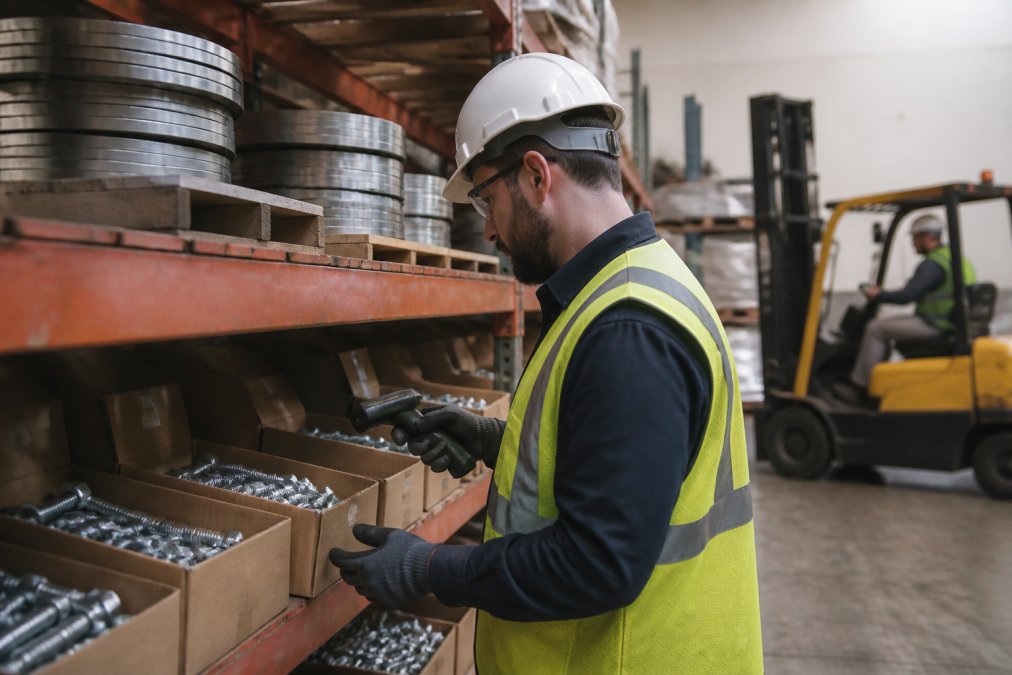
Picking the wrong grade is the most expensive mistake in fastener procurement. The three grades covering nearly all industrial work are 304, 316, and 410.
Match the grade to the worst environment the fastener will ever see, not the average one.
| Environment | Recommended Grade | Why |
|---|---|---|
| Indoor, dry, controlled | 304 | Adequate corrosion resistance at lower cost |
| Outdoor, inland, rain exposure | 304 | Handles weather without chlorides |
| Coastal, marine, saltwater | 316 | Molybdenum resists chloride attack |
| Chemical or acidic exposure | 316 | Withstands aggressive media |
| High-wear, high-strength needs | 410 | Hardened for tensile strength |
Custom stainless steel fastener manufacturing lead times typically range from a few business days for simple cut-to-length banding to several weeks for fully fabricated, non-standard components, depending on tooling, material availability, and finishing.
Suppliers who hit their dates publish a tiered turnaround table keyed to order type, not a single marketing number. The tiers below reflect how most stocked industrial fastener and banding orders move through a warehouse that holds depth:
| Order Type | Typical Dispatch Window | What Gates It |
|---|---|---|
| In-stock standard sizes, confirmed before cut-off | Same business day | Daily cut-off time |
| In-stock standard sizes, confirmed after cut-off | Next business day | Daily cut-off time |
| Cut-to-length banding from stock coil | 1-3 business days | Coil availability, cut schedule |
| Standard fasteners in a non-stocked grade | 3-10 business days | Mill or distributor replenishment |
| Custom fabrication, existing tooling | 5-15 business days | Tooling setup, finishing queue |
| Custom fabrication, new tooling | Several weeks | Tooling lead time, first-article approval |
When a schedule tightens, these levers move the date, in rough order of impact:
A stated lead time is only as good as the evidence behind it. Ask for four things before committing:
The fastest turnaround comes from inventory, not production speed. A supplier holding depth across banding widths, thicknesses, and coatings can dispatch a standard order the same day; a make-to-order supplier is always gated by tooling and material.
No minimum order fastener suppliers let you buy exactly what a job needs, which matters when you are a small electrical contractor or a maintenance supervisor restocking a few sizes rather than a distributor filling a warehouse. The trade-off is smaller than most buyers assume.
A supplier’s product range tells you whether they can cover your whole job or only part of it. The categories that matter most for industrial and construction work include stainless steel banding and cable ties.
The most useful thing a supplier can publish is guidance on which grade to choose for which environment. The table below maps common industrial settings to the grade that performs there.
| Environment | Recommended Grade | Why It Works |
|---|---|---|
| Indoor, dry, controlled | 304 | Adequate corrosion resistance at lower cost |
| Outdoor, inland, rain exposure | 304 | Handles weather without chlorides |
| Coastal, marine, saltwater | 316 | Molybdenum resists chloride attack |
| Chemical or acidic exposure | 316 | Withstands aggressive media |
| Road salt, de-icing exposure | 316 | Chloride resistance prevents pitting |
| High-wear, high-strength needs | 410 | Hardenable martensitic grade for tensile strength |
Applications span a wide set of environments, and grade and product choice shifts with each:
For industrial procurement, a fastener is only usable if it can be documented. Three compliance areas come up repeatedly, and most supplier pages skip them:
Product range is only half the story. A few installation practices prevent most field failures:
Quality assurance in fastener supply comes down to documentation and testing, not assurances. Material certification should accompany every order, confirming the grade and heat lot of the stainless steel received; without it, you cannot prove compliance to a project engineer or auditor.
Ask suppliers these questions:
Fast turnaround is a supply chain promise, and the suppliers who keep it have stock depth, honest lead times, and documentation behind every claim. Band-N-Go has served industrial buyers across North America since 2001 with no minimum order requirements, many in-stock banding widths, thicknesses, and coatings, and custom sizes and packaging built around your project. If your crews need corrosion-resistant fastening that performs under pressure, vibration, and heat, get your free quote today and see how quickly we can move.
316 stainless steel contains molybdenum, which gives it better resistance to chlorides and corrosive chemicals. It performs well in saltwater, chemical processing, and marine environments. For oil and gas pipelines or coastal installations, 316 fasteners resist pitting and crevice corrosion, extending service life and reducing maintenance costs. However, 316 costs more, so specify it only where corrosion demands justify the expense.
Ask for documented lead times on recent comparable orders, not just verbal promises. Request a written turnaround commitment with your quote. Check whether the supplier holds stock of common grades like 316, or if they must order material first. Suppliers that carry inventory and offer no minimum order requirements can often ship standard items in days rather than weeks. Also confirm their shipping method and whether expedited freight is available.
316 stainless steel adds 2-3% molybdenum, which improves resistance to chlorides, acids, and saltwater. Choose 316 for marine, chemical, or oil and gas environments where exposure to corrosive elements is constant.
Many industrial fastener suppliers impose minimum order quantities or dollar values, which can be a barrier for small contractors or maintenance teams needing a few specialty items. However, some suppliers, including Band-N-Go, offer no minimum order requirements. This means you can order exactly what you need without paying for excess inventory. Always confirm minimums before requesting a quote, as they affect total cost and lead time.