888-871-6573
Call Toll Free
Call Toll Free
Call Toll Free
Looking for a Band-It alternative for pipeline maintenance? Compare Band-N-Go, HCL Clamping, Panduit and more for corrosion-resistant banding.
Last Updated: October 4, 2026
Finding a reliable Band-It alternative for pipeline maintenance comes down to three practical needs: no minimum order barriers, fast turnaround on stainless steel banding, and a supplier who understands field conditions.
That is the real problem. The product is rarely the issue. Availability is.
Pipeline maintenance is the scheduled and emergency work that keeps fluids moving safely through onshore and offshore systems.
We also cover the specifications that actually decide whether a band holds: material grade, pressure rating, and pipe diameter compatibility.
The right alternative depends on what the repair actually has to do. Surface banding secures supports, cable trays, and instrument runs. Mechanical clamps and composite wraps seal or reinforce pressurized pipe.
The matrix below compares the three main repair families on the variables that decide field selection: pressure capability, installation time, temperature ceiling, and relative cost. Values are typical ranges for standard industrial products, always confirm the manufacturer’s published rating for your specific pipe diameter, wall thickness, and service fluid.
| Repair Family | Typical Pressure Capability | Typical Installation Time | Temperature Ceiling | Relative Material Cost | Best Application |
|---|---|---|---|---|---|
| Stainless steel banding (Band-It style) | Non-pressure-bearing; support and securement only | Minutes per band | Governed by alloy and coating; 304 and 316 grades suit most industrial ranges | Lowest | Pipe supports, cable trays, instrument runs, hose securement |
| Composite wrap | Engineered wraps are rated for live-line reinforcement on many transmission and distribution lines | Hours, including surface prep and cure | Cure and service limits set by the resin system; check the manufacturer’s data sheet | Mid to high | Corrosion repair, mechanical damage reinforcement, weld-free repair |
| Mechanical repair clamp | Full-circle clamps are pressure-rated for leaking joints and pinholes on water, gas, and process lines | Under an hour for a trained crew | Gasket and body material dependent | Highest upfront | Active leaks, joint failures, pinhole repair |
Three rules keep the selection honest:
Most practitioners find that alternatives fail for predictable reasons, and naming them upfront prevents repeat callouts:
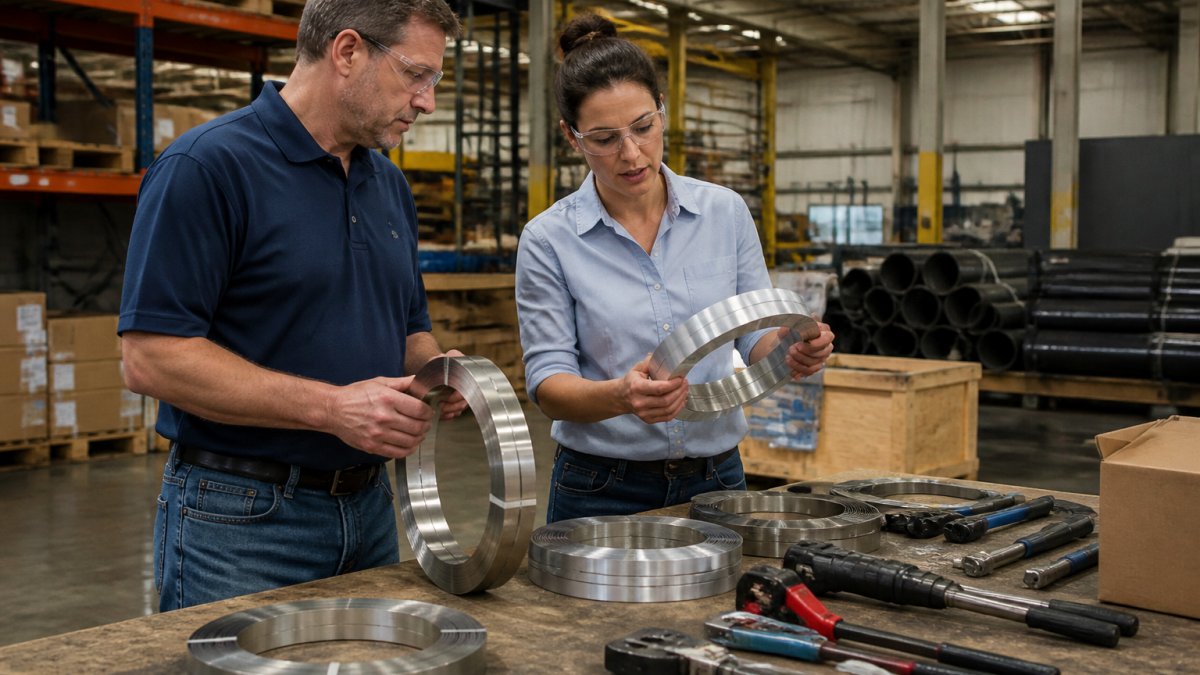
For teams that need banding in days rather than weeks, Band-N-Go stocks many banding widths, thicknesses, and coatings, and we ship custom sizes without a minimum order requirement.
Our stainless steel banding is built for consistent tension and reliable hold in all weather conditions, with high corrosion resistance for harsh environments. The products perform under pressure, vibration, and heat, which is exactly what pipeline supports and cable trays demand.
HCL Clamping manufactures high-performance stainless steel banding and clamping systems for extreme industrial and subsea work. Their range leans toward high-strength grades such as 316 and 304 stainless, with heavy-duty tensioning tools for pipeline and hose securement. If your project involves non-standard pipe diameters, they offer custom-engineered clamping solutions.
The trade-off is procurement speed. Pricing is not published, so every order starts with a consultation. For planned offshore work that is fine. For an emergency onshore repair, the quote cycle can cost you the window.
Panduit is a strong choice when vibration resistance and rapid installation matter most. Their stainless steel cable ties and banding come in several grades for chemical and salt-spray resistance, and the self-locking head design speeds up field work.
One honest limitation: Panduit’s core focus is cable management. Before you specify it for pipe clamping, verify the pressure rating for your application. It is excellent for cable trays and instrument runs, less proven for high-pressure pipe support.
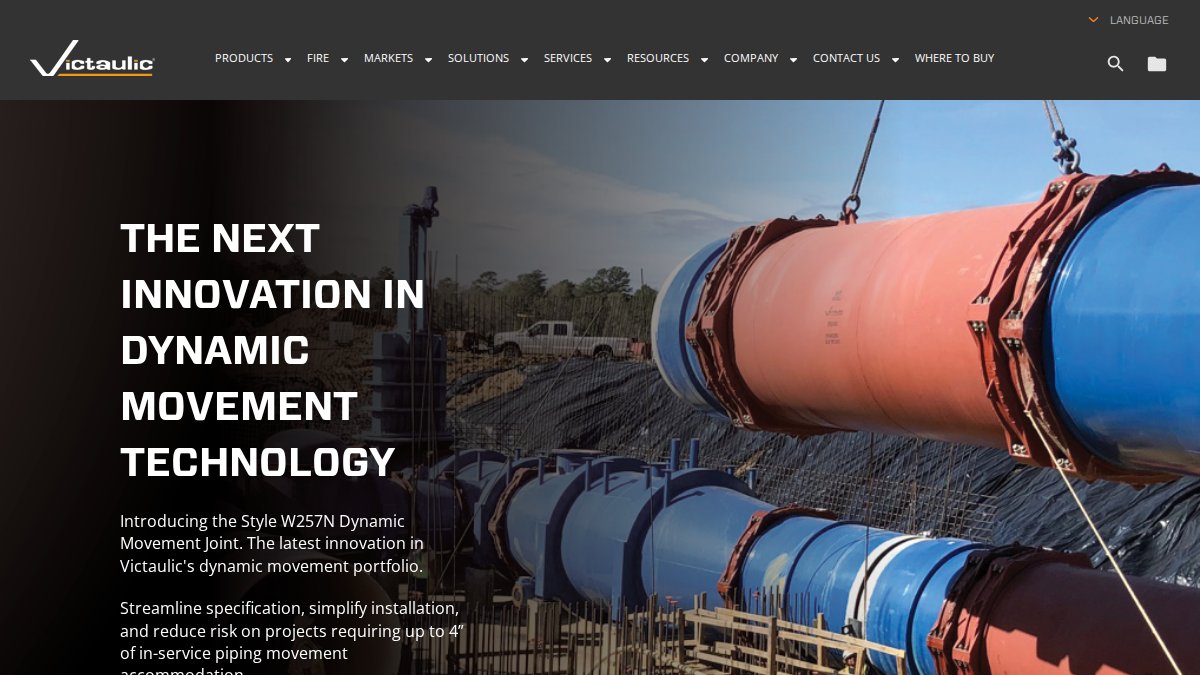
Mechanical repair clamps solve a different problem than banding. Victaulic builds mechanical pipe joining and repair systems that accommodate thermal expansion and contraction, reduce the need for hot work, and speed up maintenance downtime.
Both are pressure-rated solutions for actual leaks. Banding is not. If a pipe is weeping or a joint has failed, a clamp or composite wrap is the correct tool. If a support has shifted or a cable tray needs securing, banding is faster and cheaper.
Specification errors cause more field failures than product defects. The three variables below decide whether a band holds for the life of the asset or loosens within a maintenance cycle. This section also covers the verification step most buyer’s guides skip: how to confirm a supplier’s claim before the coil ships.
Grade 304 stainless is the general-purpose choice for utility, industrial, and indoor process work. Grade 316 adds molybdenum, which improves resistance to chlorides, the reason it is specified for saltwater, marine, offshore, and many chemical plant environments.
Chemical resistance follows the alloy, but coatings and isolators matter too. A 316 band in contact with a carbon steel support can still corrode galvanically unless an isolation pad or coated band is used.
Banding secures and reinforces. It does not seal. Pressure rating applies to the clamp or wrap, not the band. When a supplier quotes a ‘pressure rating’ for banding, treat it as a tensile or load rating and ask for the test method behind it.
For pipe diameter compatibility, measure the outside diameter, add the band thickness, and confirm the buckle or clamp fits that circumference. On insulated or coated pipe, measure over the jacket, not the bare steel.
Ask for three things before you commit a crew to a repair window:
A supplier who cannot produce these quickly is a supply risk, regardless of price.
| Environment | Recommended Grade | Additional Requirement |
|---|---|---|
| Indoor utility and process | 304 | Standard coating |
| Coastal, marine, offshore | 316 or 316L | Isolation pad or coated band |
| Chemical plant, chloride exposure | 316L | Confirm coating compatibility with the specific chemical |
| High-vibration runs | 304 or 316 | Locking head or secondary tie-off |
| Insulated or coated pipe | 304 or 316 | Measure over the jacket; specify longer band length |
Safe installation follows a fixed sequence, and skipping a step is how crews get hurt. The process below reflects standard field practice for non-welded repair and banding work.
Regulatory oversight in this space is real, and it varies by province and by the body that governs the specific pipeline.
Mechanical repair clamps and composite wrap systems are the main alternatives to stainless steel banding for pipeline repair. Mechanical clamps, like those from Victaulic or Mueller Co., provide full-circle sealing for pressurized leaks and handle high hydrostatic pressure. Composite wraps offer structural reinforcement without welding, which suits hazardous environments. For securing cables, hoses, or insulation rather than sealing leaks, stainless steel banding remains the most cost-effective option. The right choice depends on whether you need leak containment, structural repair, or simple securement.
Start with the pipe diameter and pressure rating, then match the banding grade to the environment. Grade 304 stainless steel works for general industrial use, while Grade 316 handles saltwater, chemical exposure, and offshore conditions. Check the banding’s tensile strength and the clamp’s pressure rating against your pipeline’s hydrostatic pressure. For high-vibration applications, look for self-locking head designs. Always verify chemical resistance against the specific fluid being transported, since adhesion properties and seal integrity vary by material.
Yes, several suppliers serve the Canadian market with industrial-grade stainless steel banding and fastening systems. Band-N-Go supplies stainless steel banding, cable ties, and tensioning tools with no minimum order requirements and custom sizing options. When evaluating suppliers, confirm they stock the banding widths, thicknesses, and coatings your project needs, and ask about turnaround times for custom orders. Canadian pipeline operators should also verify that fasteners meet applicable provincial and federal pipeline safety regulations.
Temperature swings, vibration, and moisture exposure are the main factors. Thermal expansion and contraction can loosen banding over time, so tensioning tools that deliver consistent tension matter. In coastal or offshore settings, salt spray accelerates corrosion, making Grade 316 stainless steel the better choice over 304. Vibration from pumps or compressors causes preload loss, which self-locking designs help prevent. Proper pipe surface preparation before installation also extends service life by improving adhesion and seal integrity.
Band-N-Go offers stainless steel banding and fastening tools with no minimum order requirement, custom sizes, and fast turnaround. Band-N-Go stocks a range of banding widths, thicknesses, and coatings. For pipeline integrity, the key differentiators are corrosion resistance, consistent tension under vibration, and material grade availability. Request test data or case studies specific to your operating environment before committing to any supplier.
Pipeline maintenance does not wait for a slow quote cycle. When a support loosens or a cable tray shifts, the crew needs the right stainless steel banding on site, in the right grade, without a minimum order standing in the way. Band-N-Go supplies custom sizes and packaging, a wide range of widths, thicknesses, and coatings from stock, and fast turnaround backed by decades of technical knowledge. Get your free quote today and secure your next repair window.